- AI System
- Featured Project
Socium Your AI Business Operating System.
Socium is an open-source, local-first AI Business Operating System that combines business knowledge, approvals, inbox workflows, publishing, automation, and AI-assisted operations in one integrated platform.
It is designed to keep operational control close to the user while allowing AI to assist with content, communication, analysis, and structured workflow decisions.
- Business Knowledge
- Approvals
- Publishing
- Unified Inbox
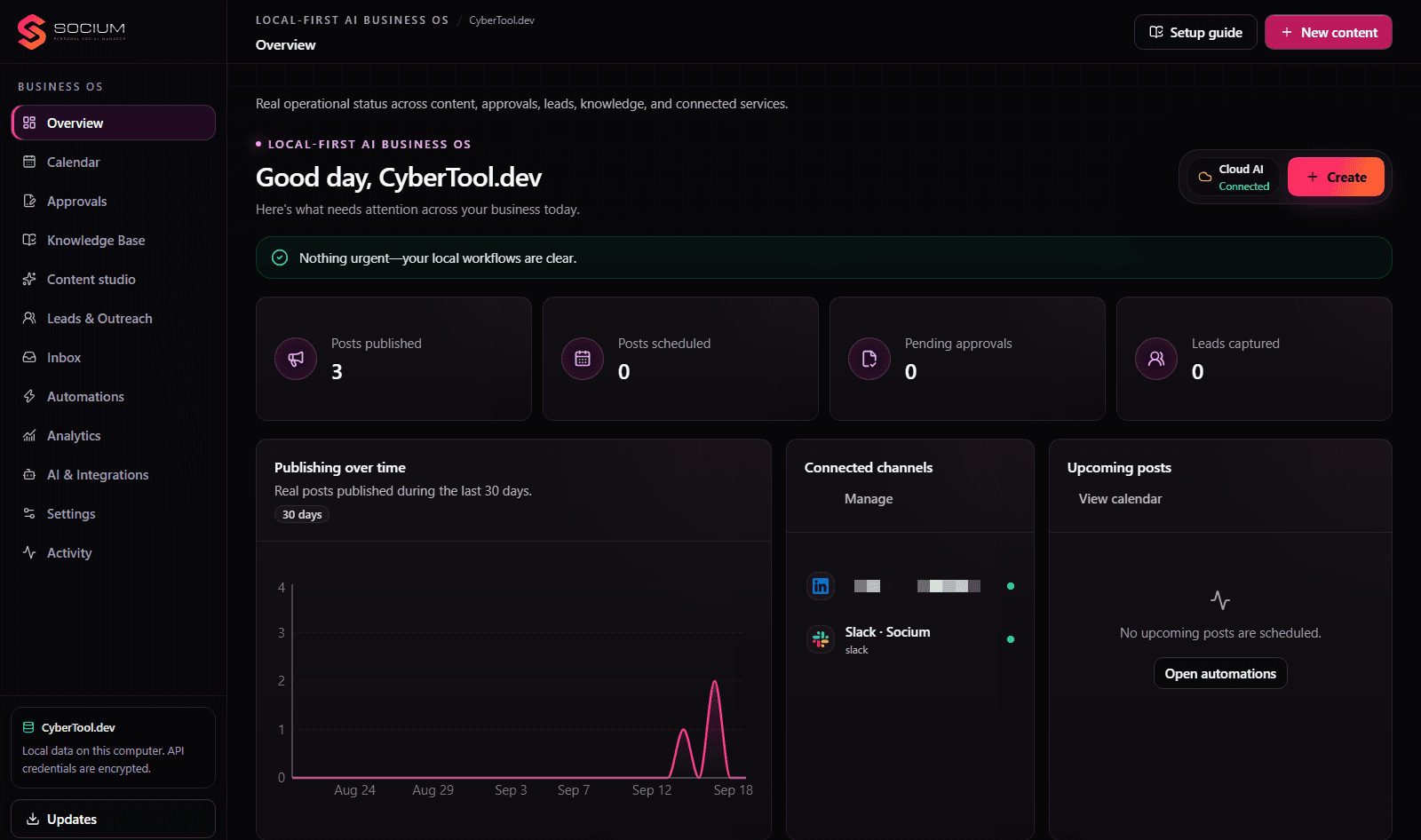
Local-firstBusiness data and workflow state are stored locally by default.
Local or cloud AIConnect private local AI or supported cloud AI providers.
Human approvalImportant actions can require explicit user approval.
Built for real operationsDesigned around durable workflows, traceable actions, and practical integrations.
01 / Problem
Operational work gets scattered.
Small teams and solo operators often manage business knowledge, content, approvals, publishing, communication, and recurring work across disconnected tools.
- Scattered business knowledge
- Disconnected approval flows
- Manual publishing and scheduling
- Repeated operational tasks
- Multiple inboxes and communication channels
- AI tools without durable workflow control
02 / Solution
One local system. Multiple operational workflows.
Socium brings knowledge, approvals, inbox work, publishing, automations, and AI-assisted operations into one local-first system.
- Confirmed business knowledge
- Durable workflows
- Shared approval boundary
- Unified inbox
- Content generation and publishing
- Local or cloud AI
- Restart-safe scheduled work
- Auditable workflow state
- Integrations
03 / Key Features
Built around controlled automation.
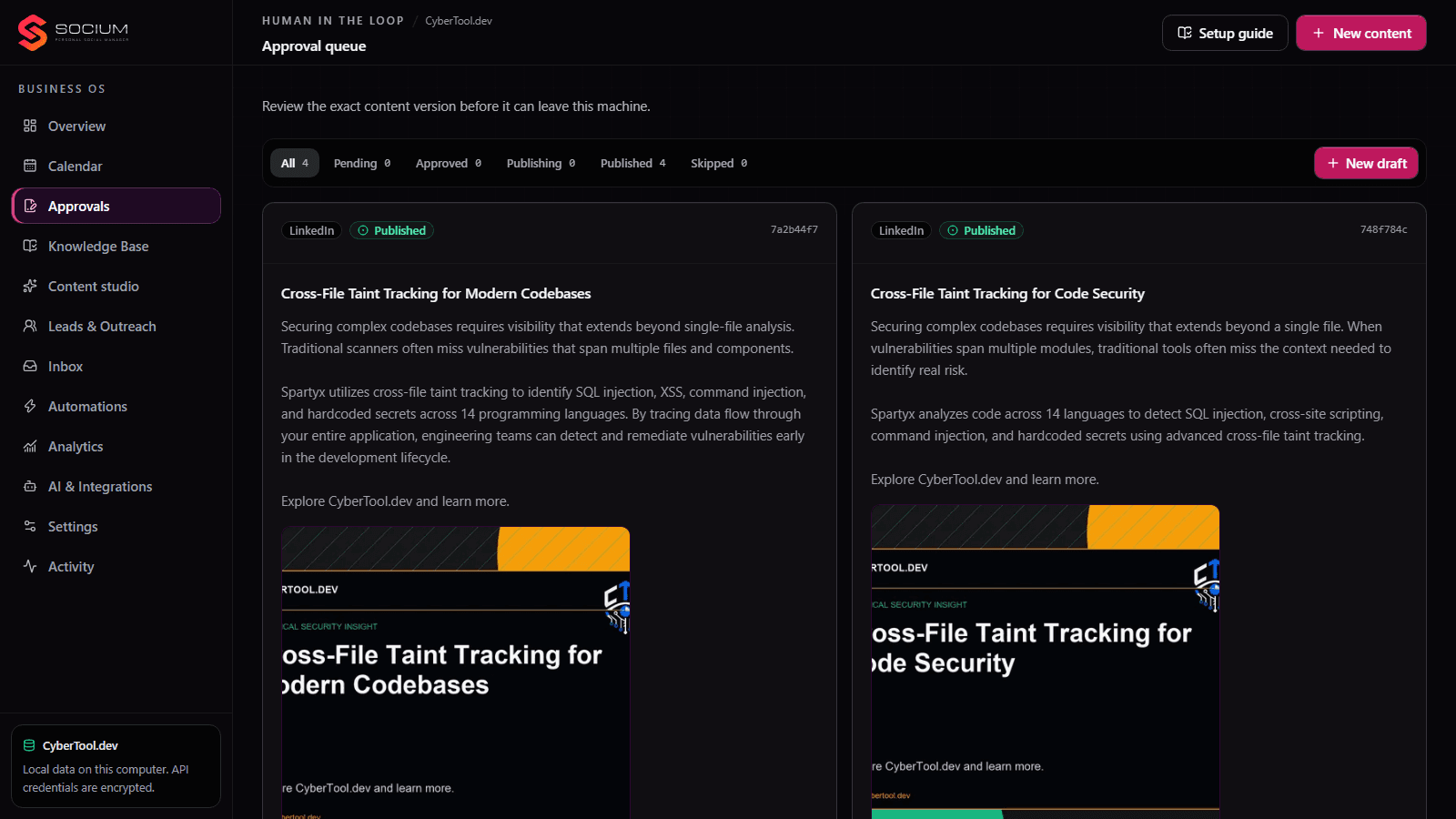
Business Knowledge
Build a confirmed business profile and source-aware knowledge base that can be reused by AI and workflows.
Workflow Automation
Run reusable operational workflows with durable state and controlled execution.
Approval System
Review, approve, regenerate, edit, or skip important revisions before execution.
Unified Inbox
Bring selected workflow, approval, and connected communication work into one operational view.
Publishing
Prepare and publish approved content through supported connected channels.
Local or Cloud AI
Use private local AI or supported cloud providers depending on privacy, capability, and deployment needs.
Integrations
Connect supported services for communication, publishing, email, and operational workflows.
Durable Local State
Persist workflow state, approvals, settings, media, and operational history locally.
Connectors
- Telegram
- Slack
- Gmail
- WordPress
- Facebook Page
- Instagram Professional
Capabilities differ by channel.
04 / Architecture
Local-first by design.
Socium runs on the operator's own machine. The browser talks to one local surface; the API, database and worker stay on loopback, and the internet is used only for providers the operator connects.
Local stack · loopback only
- UserSingle operator01
- Next.js Console127.0.0.1 · same-origin02
- Local FastAPI ServiceTyped, validated API03
- Workflow · Approval · Job LogicDeterministic rules04
- SQLite Durable StateWAL database05
Connected modules
- Business KnowledgeConfirmed, source-aware facts
- AI ProvidersLocal or cloud
- Publishing ConnectorsExact approved revisions
- Communication ConnectorsTelegram · Slack · Gmail
- MediaPrivate local media vault
- Background WorkRestart-safe job worker
- Native System IntegrationInstaller · tray · shortcuts
Outbound connections only: AI, approval, and publishing providers are contacted when the operator connects them.
Control flow
- Knowledge
- Workflow
- AI Assistance
- ApprovalHuman
- Execution
- Audit
Local data ownership
Operational state remains local by default.
Durable workflows
Workflow state survives navigation and application restarts.
Explicit approval
Impactful revisions can require a current approved state.
Deterministic execution
Scheduling, permissions, retries, and execution logic do not depend on AI improvisation.
AI as assistance
AI is used where generation, analysis, or classification is useful.
05 / Tech Stack
Modern tools. Local operational control.
- Next.jsApplication UI
- TypeScriptFrontend Logic
- FastAPILocal API Service
- PythonBackend Services
- SQLiteDurable Local Data
- RustNative Installer / Windows Integration
- PlaywrightBrowser Automation / Testing
- AI ModelsLocal / Cloud Providers
06 / Product Gallery
Inside Socium.
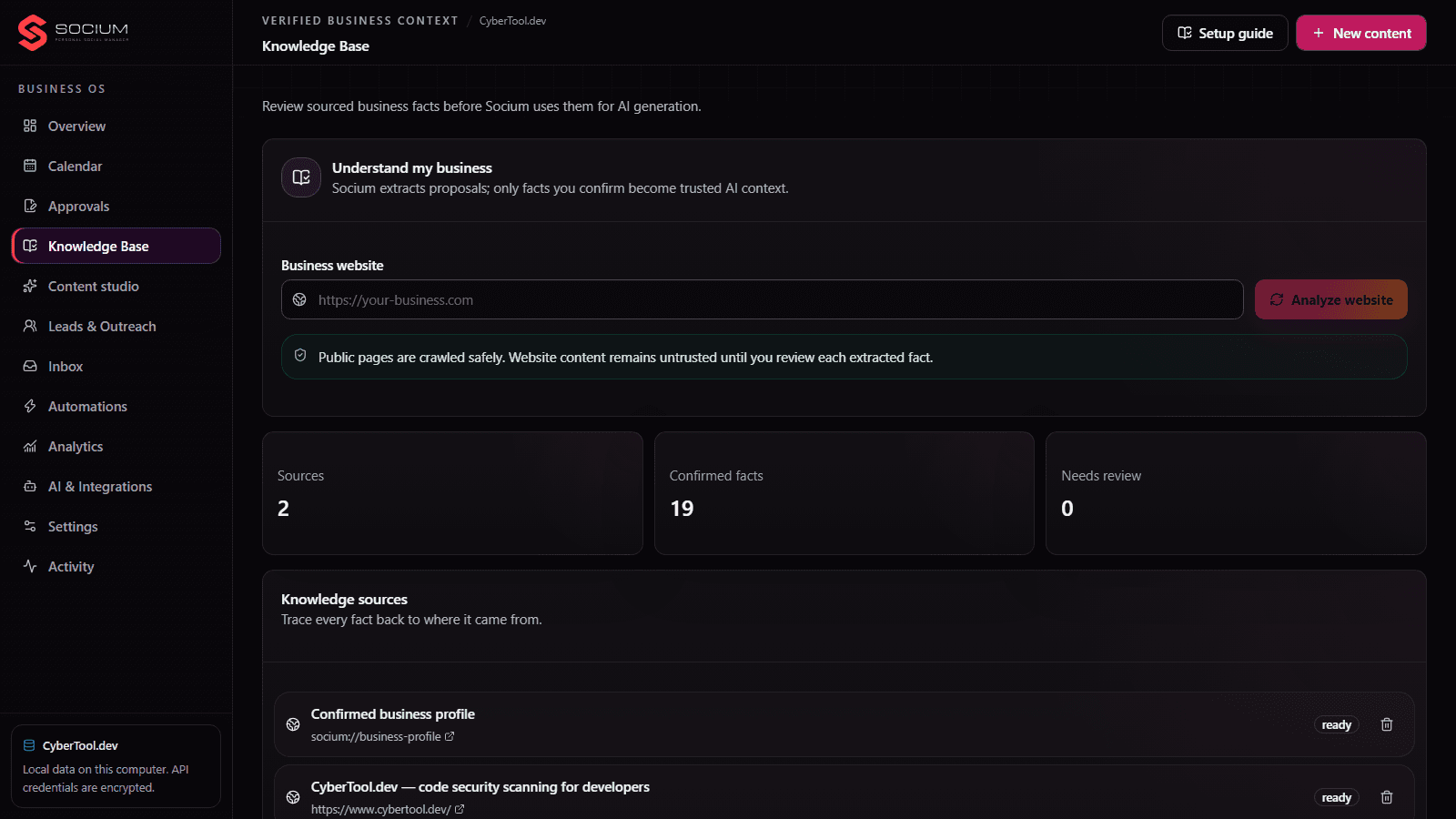
Knowledge BaseSourced business facts, reviewed before AI can use them. 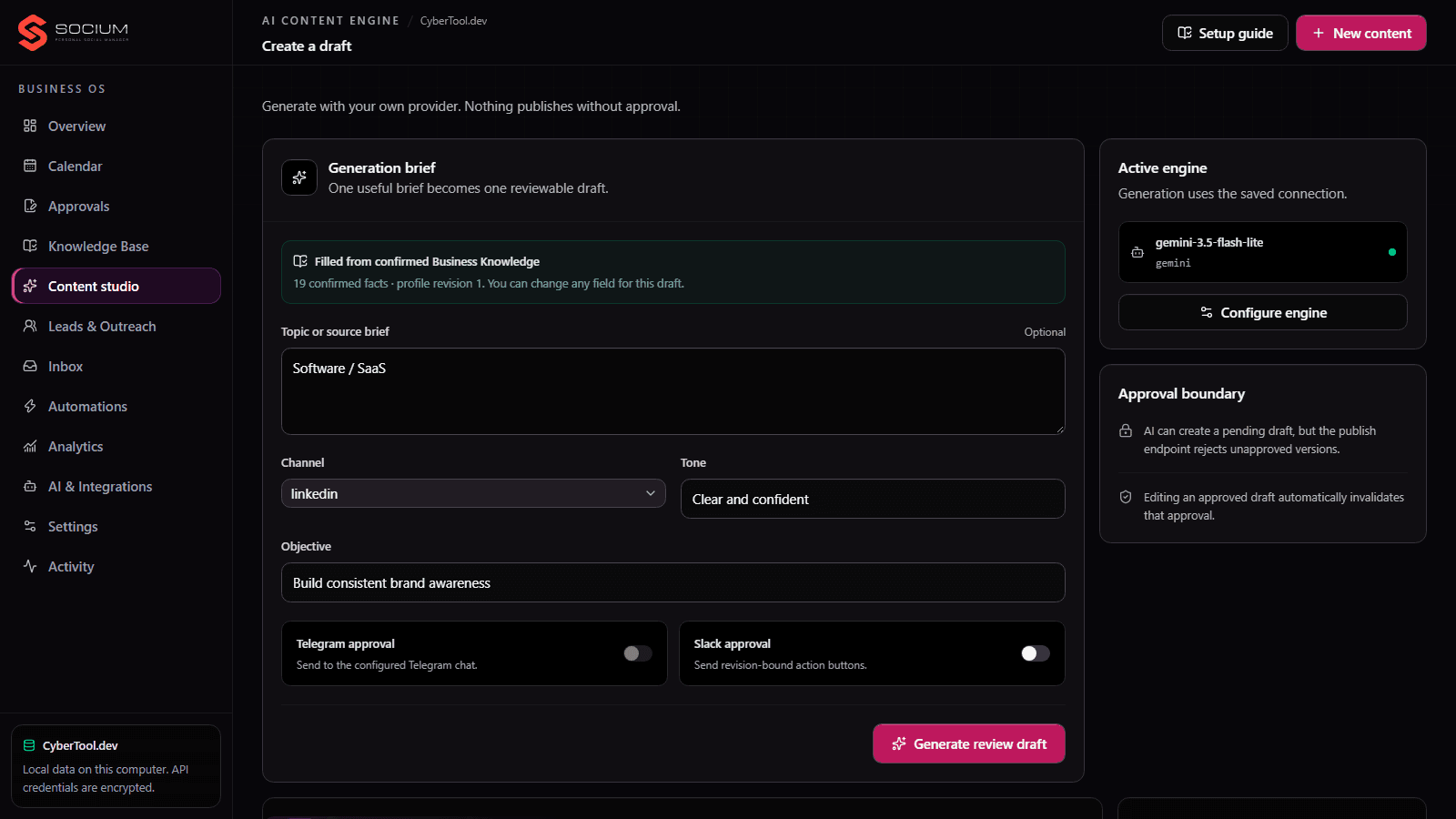
Content StudioOne brief becomes one reviewable draft. ApprovalsThe exact revision is reviewed before it leaves the machine. 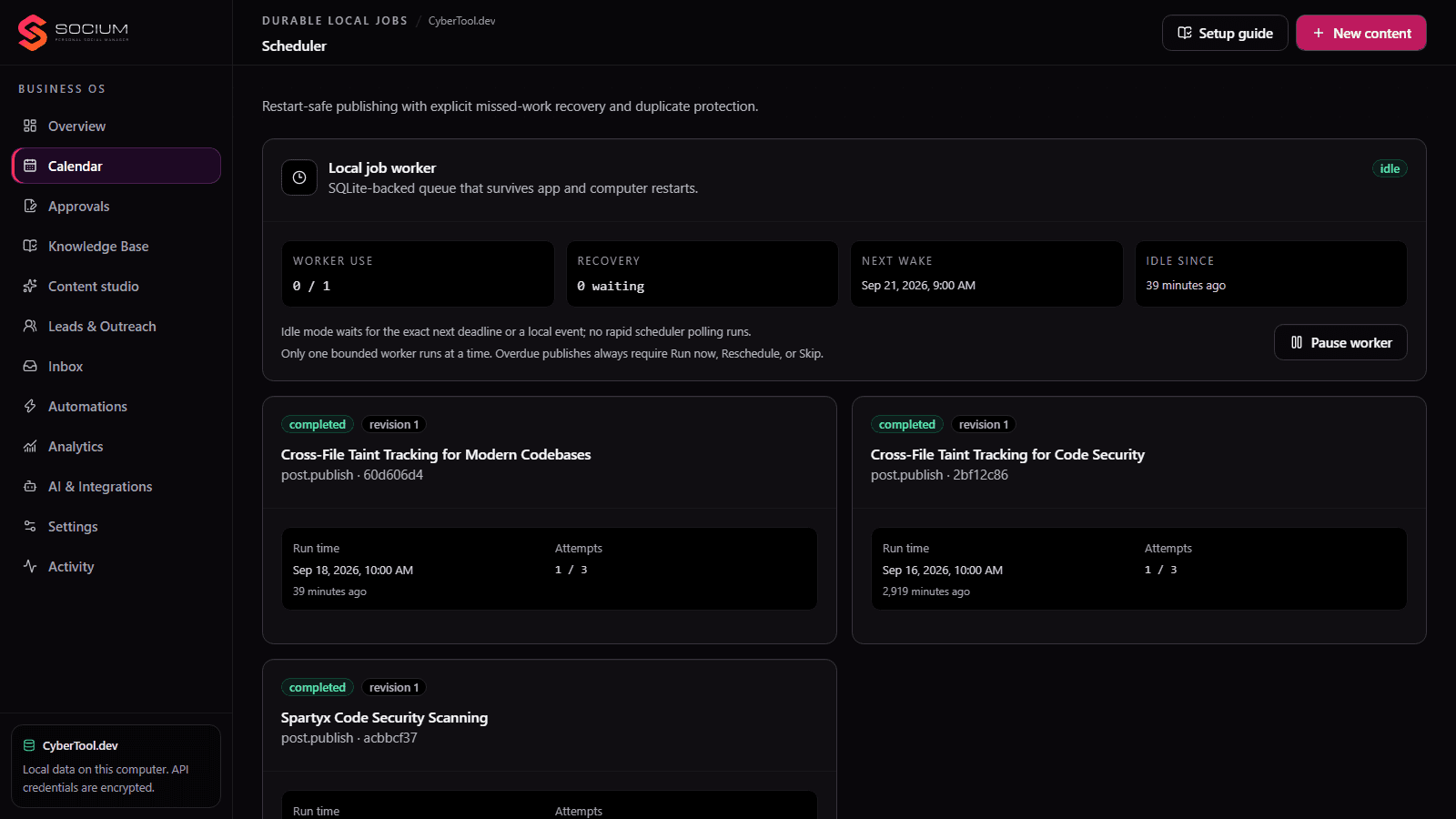
SchedulerRestart-safe local jobs with explicit missed-work recovery. 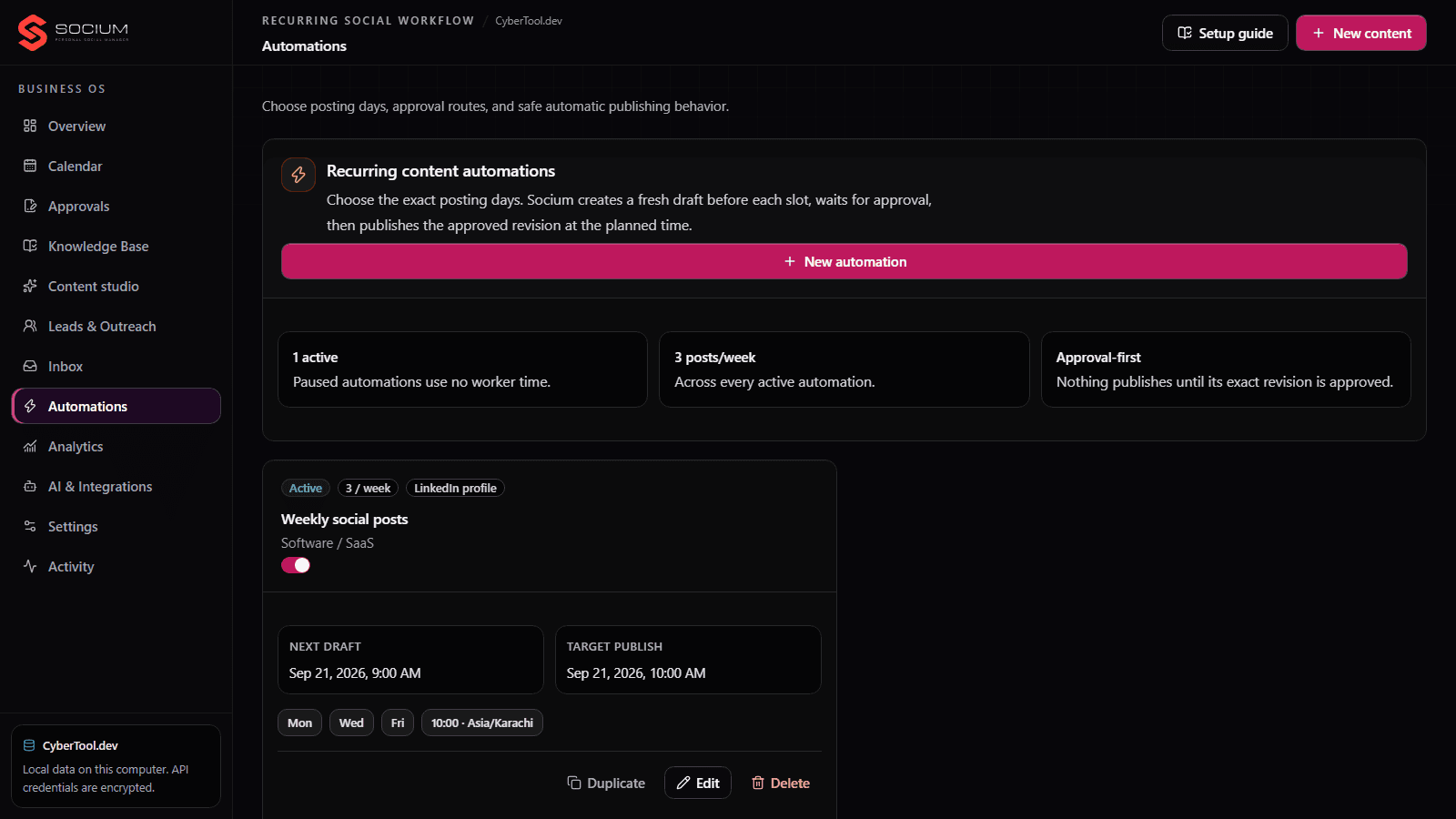
AutomationsRecurring drafts that still stop at approval.
07 / Engineering Decisions
Why Socium is built this way.
- 01
Local-first
Keep durable business state close to the user and reduce dependence on a hosted Socium account.
- 02
Human-in-the-loop
Publishing, replies, and other consequential actions benefit from explicit revision-level approval.
- 03
Deterministic workflows
Scheduling, retries, state transitions, permissions, and execution need predictable software behavior.
- 04
Local + cloud AI
Different workloads have different privacy, capability, latency, and cost requirements.
- 05
Native distribution
Packaged installers let people run Socium locally without assembling the development stack; a small Rust helper handles Windows integration.
Next
Interested in this kind of system?
PACSAL designs software and automation systems around real operational requirements.